Creating and Growing a Brand New Food Brand Online
is Incredibly Difficult.
Learn meta ads -
sell online.



About Us
Two Decades of
Food Sales
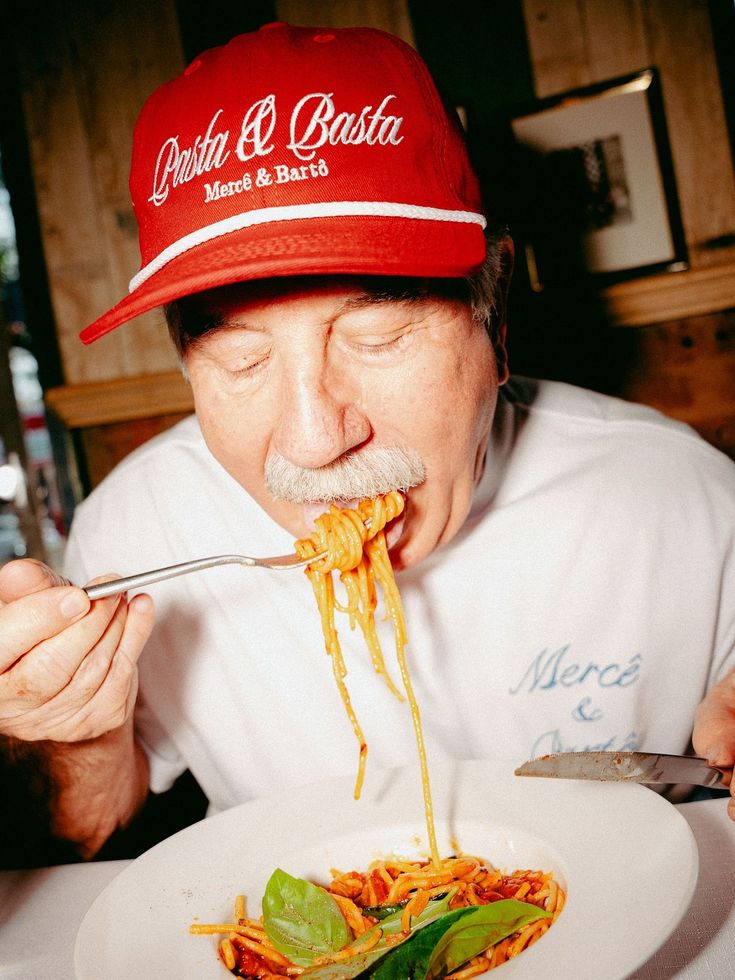
I started my first food brand in 2005.
Back then, there were no real systems—if you wanted sales, you showed up. Farmers markets, small retailers, local events. I was loading coolers at 5am, setting up tables, and learning one thing fast:
people don’t buy what they say they like—they buy what makes them act.
From there, I started and sold three more brands.
I stopped focusing on the product and started focusing on behavior. What actually drives someone to choose one option over another. I’ve worked with hundreds of founders since.
The ones who understand buying behavior win.
Online ordering has changed a lot, but it hasn't changed that. This is how I have transitioned to a life dependent on Meta ads.
Why Your Food Ads Don’t Convert (It’s Not the Product)
Why Your Food Ads Don’t Convert (It’s Not the Product)
Most food brands don’t lose on Meta because of bad products.
They lose because they talk like a menu, not like a craving.
I know that sounds off.
Bear with me.
I was sitting in a small kitchen in Austin with a founder selling protein brownies.
Great product. Clean ingredients. Strong margins.
But the ads were dead.
Every creative said the same thing.
“High protein.”
“Low sugar.”
“Healthy snack.”
No one cared.
We changed one line.
“Midnight cravings don’t care about your diet. This fixes that.”
CTR doubled in 48 hours.
CPA dropped 37%.
Same product.
Different hook.
That’s the game.
The Real Problem: Food Brands Sell Logic, Buyers Act on Impulse
Food is emotional.
Meta is interruption-based.
If your ad doesn’t trigger a craving in under 2 seconds, it dies.
Most brands try to educate.
Winning brands provoke.
You’re not selling macros.
You’re selling a moment.
Late night hunger.
Post-workout guilt.
Stress eating without consequences.
That’s what converts.
Core Breakdown
1. Creative Strategy (Hooks Are the Entire Game)
Most food brands open with features.
Ingredients. Calories. Packaging.
That’s not a hook. That’s a description.
What actually works is tension.
The original fitness hooks translate directly here.
But instead of “get abs faster,” it becomes:
Crave without guilt.
Indulge without consequence.
Eat this instead of ruining your diet.
Your creative should feel like a thought someone already had.
Ad angles that convert:
“I eat this every night and still lost weight.”
“This replaced my Uber Eats habit.”
“I stopped binge eating after finding this.”
Visuals matter more than anything.
Close-ups of texture.
Breaking the product open.
Chocolate melting. Crunch sounds.
If they can’t almost taste it through the screen, you lose.
2. Offer Construction (AOV Solves Your Ad Problems)
Most brands try to win on a single product.
Bad move.
Meta ads need margin flexibility.
That comes from AOV expansion.
Bundles outperform singles. Every time.
Instead of selling a $4 snack, sell a $28 bundle.
Now you can afford a $15 CPA.
What works:
Starter packs
Variety bundles
“Try all flavors” kits
Add urgency without being fake.
“First-time bundle discount”
“Limited batch flavors”
Subscriptions are your backend.
Not your front-end hook.
Acquire first.
Retain later.
3. Audience Targeting (Stop Overthinking This)
Most brands over-target.
Interest stacking. Narrow audiences. Micro-segments.
That kills scale.
Meta is better than you at finding buyers.
Your job is to feed it good creative.
Broad targeting wins.
Let the algorithm optimize for conversion events.
Your real targeting is your message.
One ad = one type of buyer.
Diet-focused buyer
Craving-driven buyer
Convenience buyer
Don’t mix them.
Clarity scales. Confusion burns budget.
4. Testing Framework (Volume Beats Opinions)
Most brands don’t test enough.
They launch 3 ads.
Wait a week.
Make emotional decisions.
That’s why they plateau.
You need volume.
Test 10–15 creatives per week.
Same product. Different hooks.
Change only one variable at a time:
Hook
Visual
Opening line
Kill fast. Scale faster.
Your job isn’t to be right.
It’s to find what the market responds to.
5. Scaling Logic (Winners Get Fed, Not Tweaked)
Most brands find a winner…
Then ruin it by editing.
Don’t touch winning ads.
Duplicate them.
Increase spend gradually.
Let them run until performance drops.
Then replace with new tested winners.
Scaling is not creativity.
It’s allocation.
Put more money behind what already works.
Tactical Applications
Creative
What brands do wrong:
Talk about ingredients
What works:
Trigger cravings and internal conflict
Example hooks:
“You said you’d eat clean today. Then 9pm hit.”
“This is what I eat when I want junk food without the regret.”
Offer
What brands do wrong:
Push single SKU
What works:
Bundles that increase AOV
Example:
“7-day snack reset pack”
“Late-night survival bundle”
Targeting
What brands do wrong:
Layer interests
What works:
Broad + message-specific creatives
Testing
What brands do wrong:
Low volume, slow decisions
What works:
Aggressive iteration cycles
Scaling
What brands do wrong:
Edit winners
What works:
Duplicate and spend
Execution Layer
Start with 10 creatives.
Focus only on hooks and visuals.
Same product. Same offer.
Launch broad targeting.
Optimize for purchases.
Watch CTR first.
If it’s low, your hook is weak.
Then watch CPA.
If CTR is high but CPA is bad, your offer is broken.
Kill anything below threshold fast.
Double down on winners within 48–72 hours.
Then repeat.
Closing
Meta ads for food brands aren’t about branding.
They’re about behavior.
Cravings. Impulse. Justification.
If your ads don’t tap into that, nothing else matters.
But when they do, everything compounds.
Lower CPA.
Higher AOV.
Repeat buyers.
That’s how you turn snacks into a system.