Creating and Growing a Brand New Food Brand Online
is Incredibly Difficult.
Learn meta ads -
sell online.




About Us
Two Decades of
Food Sales
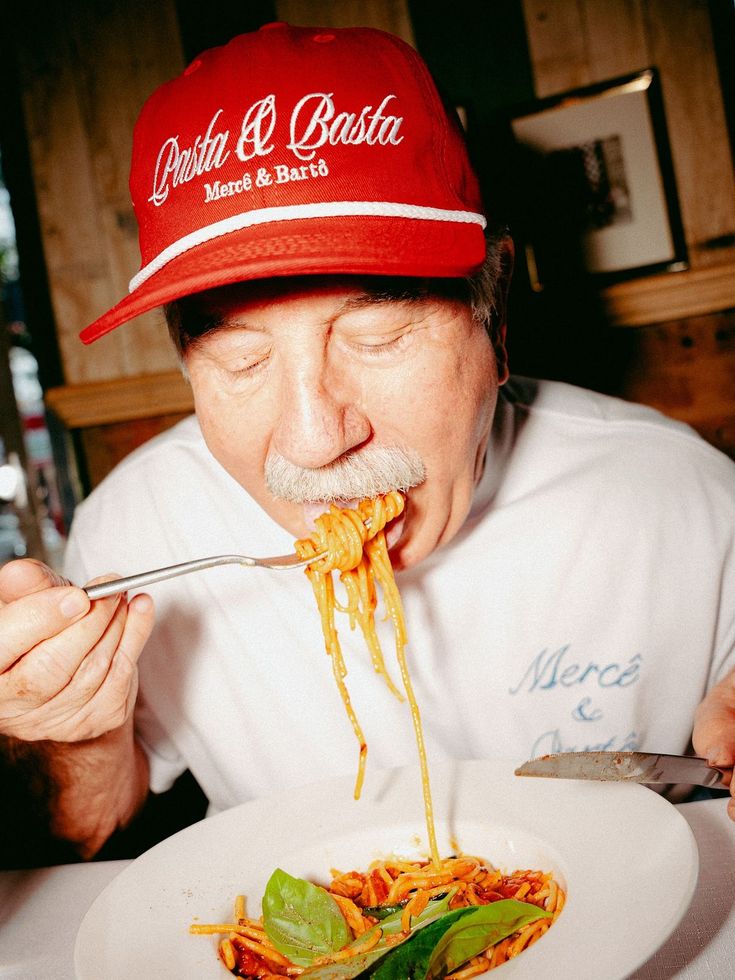
I started my first food brand in 2005.
Back then, there were no real systems—if you wanted sales, you showed up. Farmers markets, small retailers, local events. I was loading coolers at 5am, setting up tables, and learning one thing fast:
people don’t buy what they say they like—they buy what makes them act.
From there, I started and sold three more brands.
I stopped focusing on the product and started focusing on behavior. What actually drives someone to choose one option over another. I’ve worked with hundreds of founders since.
The ones who understand buying behavior win.
Online ordering has changed a lot, but it hasn't changed that. This is how I have transitioned to a life dependent on Meta ads.
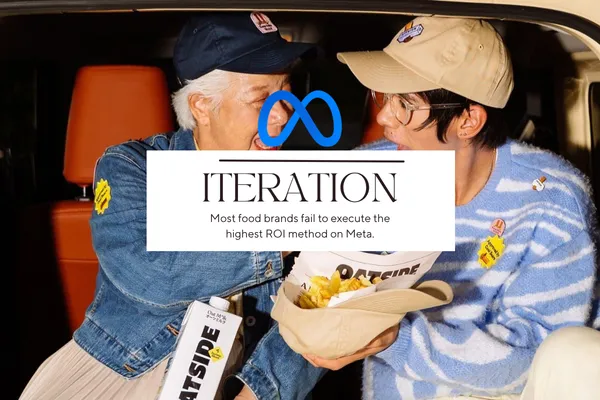
Improve Your Snack Brand 10 Fold With This Strategy
Most Food Brands Are Losing Money on Meta Because They're Guessing
I know that sounds harsh. But it's true.
I've watched snack brands spend $10,000 a month on Meta ads and still have no idea why one creative worked and another didn't. They'll boost a pretty product shot, get a mediocre CPA, shrug, and try something different next week. That's not testing. That's burning money with extra steps.
Here's what I figured out: the brands that consistently lower their CPA and scale aren't necessarily making better-looking ads. They're running a better system. And the system starts before you ever open Ads Manager.
Your Creative Problem Is Actually a Process Problem
Most food brands approach creative like this: shoot some content, write a caption, run it, check the ROAS, panic, repeat. There's no structure. No controlled variables. No way to know what actually moved the needle.
The fix isn't more content. It's structured testing where you change one thing at a time and let the data tell you what your buyer actually responds to. When you control the variables, every ad you run teaches you something specific. Over time, that compounds. Your CPA drops. Your winning creatives stack up. You stop guessing.
Think of it like this: your ad account should get smarter every single week. If it's not, you don't have a testing system — you have a content calendar.
Start With the Problem, Not the Product
Here's where most snack brands go wrong immediately. They lead with the product. Beautiful close-up of the bag. Satisfying crunch sound. "Made with real ingredients." And then they wonder why the CTR is flat.
Your buyer isn't scrolling Instagram thinking about your product. They're thinking about themselves. Their craving at 3pm. The guilt of eating junk. The hassle of finding a snack that doesn't taste like cardboard and destroy their macros. Your job is to find the problem that already lives in their head and put it on screen.
So before you shoot a single frame, map out five real problems your buyer experiences. Not features you want to highlight — actual friction they feel. For a protein snack brand, that might look like: "I always crash after my afternoon snack," "Everything high-protein tastes like chalk," "I keep buying stuff my kids won't actually eat," "Healthy snacks disappear from shelves before I can restock," or "I spend too much on snacks that don't keep me full." Five problems. One format. One ad per problem.
Now you have a controlled test. Same visual style, same pacing, same CTA. The only variable is the opening problem. Run them. The one with the strongest CTR and conversion rate is telling you something real about what your buyer actually cares about.
The Format Comes After the Message
Once you know which problem hits, then you start playing with format. Not before.
This is the sequence most brands reverse. They decide on a Reel because Reels are performing well right now, or a UGC talking head because someone told them that's what converts — and then they try to fit their message into that container. That's backwards.
The message is the asset. The format is the delivery vehicle. Once you have a validated problem angle — say, "I can never find a snack that's actually satisfying without wrecking my diet" — now you can test how to deliver that message. A founder talking directly to camera. A customer pulling the product out of a gym bag. A side-by-side comparison of your product vs. a gas station snack. A street interview where you ask people what they wish existed. Each format is a new test built on a proven foundation.
For food brands specifically, the visual stakes are high. Texture matters. The sound of a wrapper. A close-up of someone biting into something and their face doing the work. These aren't just nice-to-haves — they're conversion levers. But only layer them in once you know the message underneath is solid.
How Many Ads, and When to Move On
Three to five ads in your first round. One per problem. That's it. Don't overcomplicate the launch phase.
You're not trying to find a winner on day one. You're trying to eliminate losers fast. Give each creative enough impressions to produce stable data — typically $50–100 in spend per ad, depending on your CPMs. Look at CTR first to gauge scroll-stopping power, then conversion rate to see if the traffic actually buys. CPA is your final arbiter. If one angle is pulling a CPA 30% lower than the others, that's your validated message.
Then you enter phase two. Take the winning problem and build three to five new creatives around it — different formats, different hooks, same core message. This is where food brands can really win because the product itself is inherently visual and sensory. The crunch. The melt. The "I can't stop eating these" reaction. Layer those in now that you know the message underneath is connecting.
Repeat this loop every week and you're not just running ads — you're building a compound machine. Each week, you know a little more about your buyer. Each week, your CPA has a reason to drop.
What Decides a Winner
CTR tells you if the hook is stopping the scroll. Conversion rate tells you if the landing page and offer are closing the deal. CPA tells you if the whole system is profitable.
If your CTR is strong but conversion rate is low, the ad is working and your offer or landing page isn't. That's a different problem to fix. If CTR is weak, the hook isn't doing its job — go back and test new openers. Food-specific hooks that tend to work: sensory statements ("This hits different at 3pm"), contrast hooks ("I've tried every protein bar. Most of them taste like regret."), and direct problem calls ("If you're still buying [generic competitor category], you're overpaying for something that doesn't even work").
The metric that matters most for scaling is CPA relative to your LTV. If a customer orders once and never comes back, you need a very low CPA to be profitable. If you're selling a subscription snack box or you have strong repeat purchase data, you can afford to pay more to acquire. Know your numbers before you decide what a "good" CPA looks like.
The Actual Execution Plan
Week one: Define your ICP tightly. Not "health-conscious millennials." Specifically: who are they, what do they eat now, what do they wish existed, what's their biggest daily frustration around snacking. Write out five real problems. Shoot one creative per problem in the same format — UGC talking head is a solid default. Launch with equal budgets.
Week two: Review performance. Identify the winning problem by CTR and CPA. Kill the losers. Build three to five new creatives around the winner — this time varying the format and visual approach. Lean into what makes your product visually compelling.
Week three onward: Iterate on format while holding the message. Test new hooks on your winning angle. Expand to new problems only after you've exhausted the first one. Keep your ad account clean — don't let dead creatives drain budget.
Every week, you know more than you did the week before. That's the whole game. Most food brands never build this loop. They spend money hoping something lands. You can do something different — run a system that gets smarter every single time you launch.
That's how you build predictable customer acquisition on Meta. Not luck. Not pretty packaging. A process that compounds.
Want the visual creative side dialed in too? The way your product looks on screen can make or break the hook — especially for food. Make sure your texture shots, packaging close-ups, and reaction clips are pulling weight before you scale anything.